SWIR Cameras for Every Inspection Line, Lab and Long-Range Job
See Water. See Inside Silicon. See Past Haze.
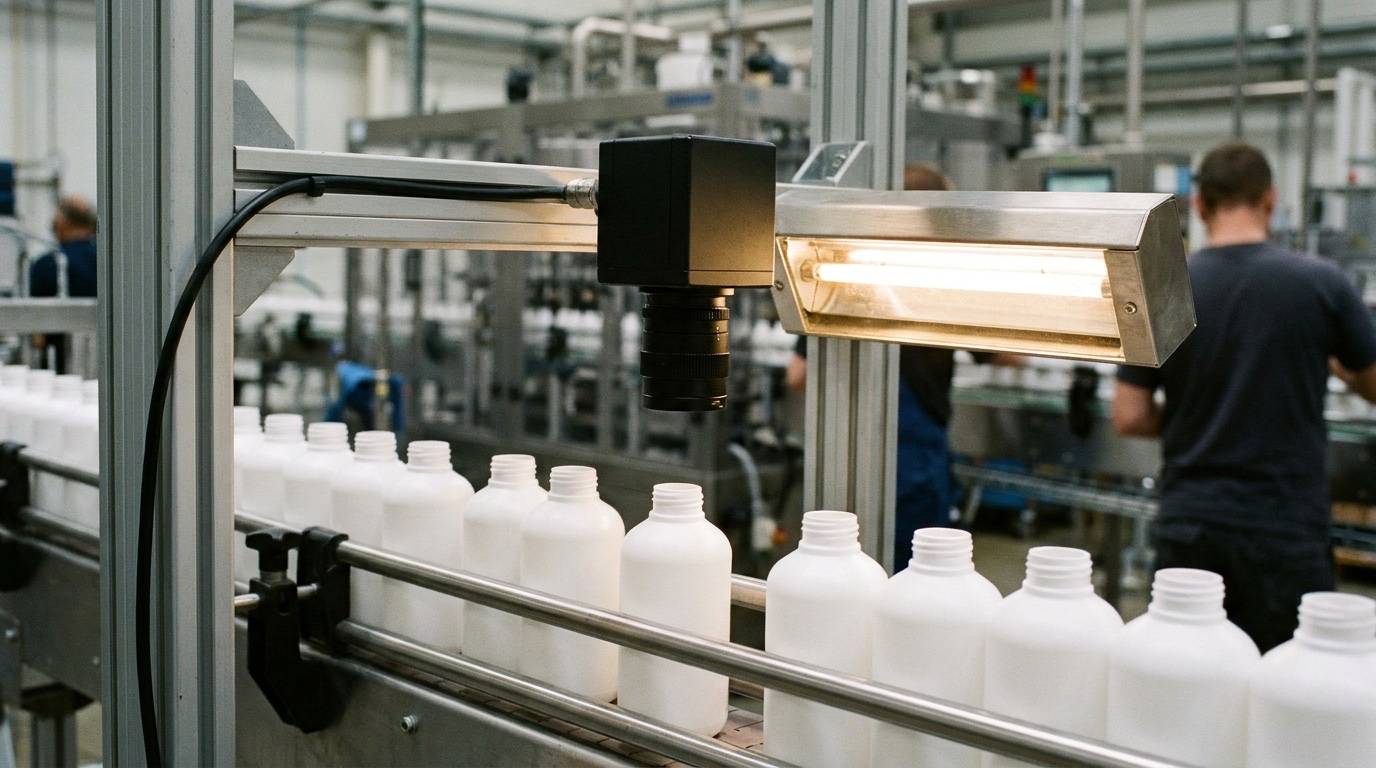
SWIR cameras pick up short-wave infrared light, about 900 to 1,700 nm on a standard InGaAs sensor, most of it past the point where an ordinary silicon sensor stops responding. Plants use them to sort food and plastics and check fill levels through opaque bottles, and labs use them to look inside silicon and to see laser light.
Light just past where silicon stops
Short-wave infrared sits between the near infrared that ordinary cameras can just reach and the thermal bands that show heat. A SWIR camera still images reflected light, so its pictures look like black and white photographs with normal surface detail. What changes is how materials look. Wet patches go dark and a silicon wafer turns see-through, while plastics that match in color can look nothing alike.
Silicon sensors stop responding at about 1,100 nm, because longer wavelengths do not carry enough energy to free an electron in silicon. SWIR cameras use a different detector, most often indium gallium arsenide (InGaAs), which keeps absorbing out to about 1,700 nm.
Where each detector responds
Human eye
about 400 to 700 nm
Silicon CMOS or CCD
fades out by about 1,100 nm
Standard InGaAs
about 900 to 1,700 nm
Visible-extended InGaAs
about 400 to 1,700 nm
Extended SWIR
to about 2.2 to 2.5 µm
Wavelength in nm
Wavelength in nm
- InGaAs (SWIR) sensors
- Silicon sensors and the eye
- Laser lines at 1,064 and 1,550 nm
- Water bands near 1,450 and 1,940 nm
Ranges are approximate and differ by sensor; a faded end means the response tails off there. The 1,940 nm water band is past standard InGaAs and only extended SWIR sensors reach it. Check the quantum efficiency curve of the exact camera you are looking at.
- Water and moisture
- Water absorbs strongly around 1,450 nm, so wet product, damp patches and liquids come out dark. That contrast is how SWIR cameras grade moisture, pick dry foreign material out of moist product, and read fill levels through containers you cannot see into.
- Inside silicon
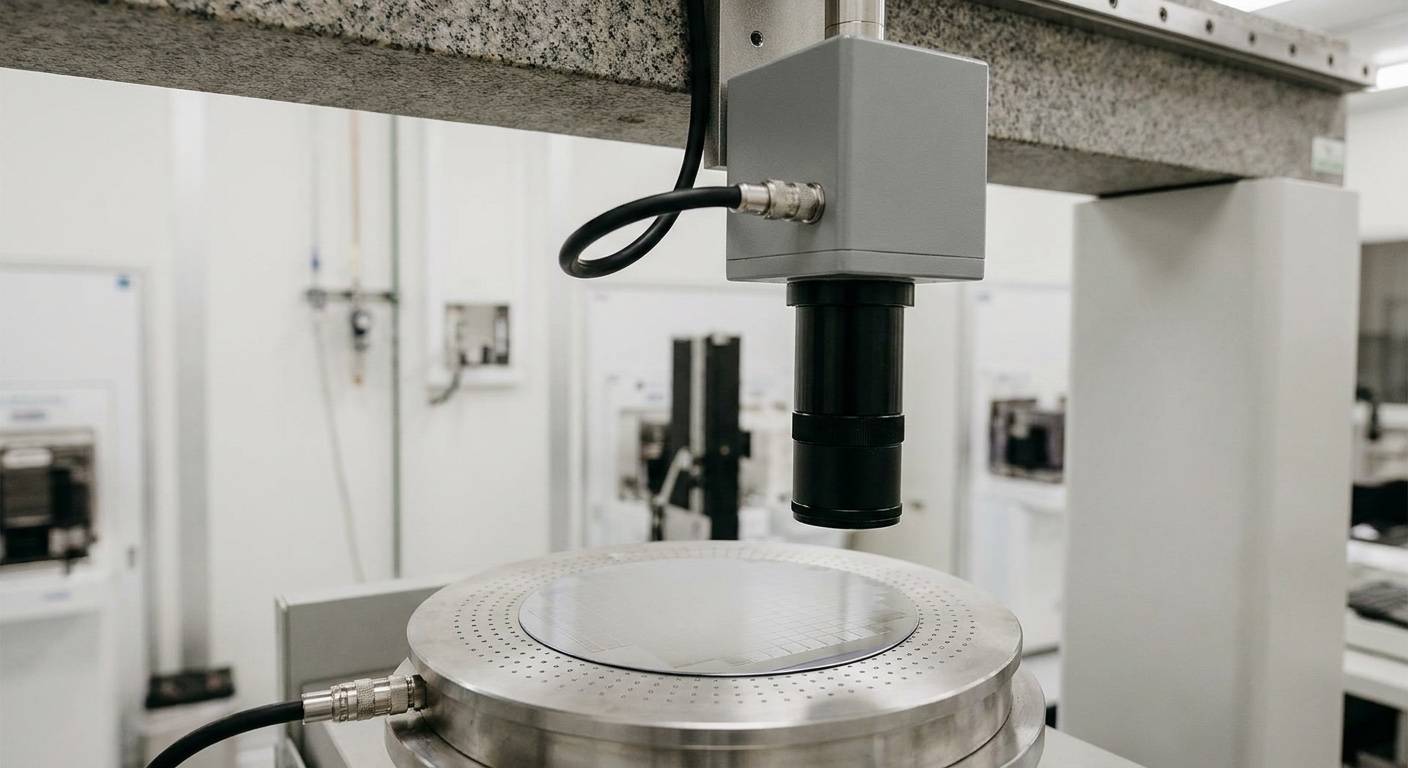
- Silicon goes transparent past about 1,100 nm. A SWIR camera can look straight through a wafer or an ingot and find cracks, saw marks and voids that a visible camera cannot reach.
- Through haze, and at night
- In many haze and light-smoke conditions SWIR light scatters less than visible light, so distant detail holds its contrast. Dense smoke and thick fog still block it. After dark, the faint glow of the upper atmosphere gives off SWIR light a sensitive camera can work with.
- Laser light
- The 1,064 nm and 1,550 nm laser lines used in rangefinders and designators show up clearly. A silicon camera barely registers 1,064 nm and cannot see 1,550 nm at all.
- Material differences
- Two materials with the same visible color often reflect SWIR light differently. Recycling sorters rely on this to tell one polymer from another. Plastics colored with carbon black absorb the light and are still hard to sort this way.
- Behind glass, and very hot objects
- Ordinary window glass passes SWIR light, so the camera can sit behind a window, which a long-wave thermal camera cannot do. Molten glass and metal give off enough SWIR light of their own to be imaged directly.
SWIR next to visible and thermal cameras
| Property | Visible | SWIR | Thermal (long-wave) |
|---|---|---|---|
| Wavelength | Visible: About 400 to 700 nm | SWIR: About 900 to 1,700 nm; extended sensors go further | Thermal: About 8 to 14 µm |
| Image comes from | Visible: Reflected light | SWIR: Reflected light | Thermal: Heat the object gives off |
| Usual sensor | Visible: Silicon CMOS or CCD | SWIR: InGaAs; also quantum dot and germanium designs | Thermal: Microbolometer |
| Needs a light source | Visible: Yes | SWIR: Yes: sun, halogen, SWIR LEDs or night glow | Thermal: No |
| Works through ordinary glass | Visible: Yes | SWIR: Yes | Thermal: No |
| Typical jobs | Visible: Color, print, dimensions | SWIR: Moisture, sorting, inside silicon, haze, lasers | Thermal: Temperature, heat loss, seeing in total darkness |
The detector decides what the camera can see
The sensor material sets the wavelength range and the noise floor, and it accounts for much of the price. InGaAs is the established choice. Newer designs put the SWIR-sensitive layer straight onto a silicon readout chip, or use materials a silicon foundry can process.
Whatever the material, read the quantum efficiency curve, the dark current at the temperature you will run at, and the defective-pixel spec on the datasheet. The headline wavelength range alone tells you little.
- Standard InGaAs
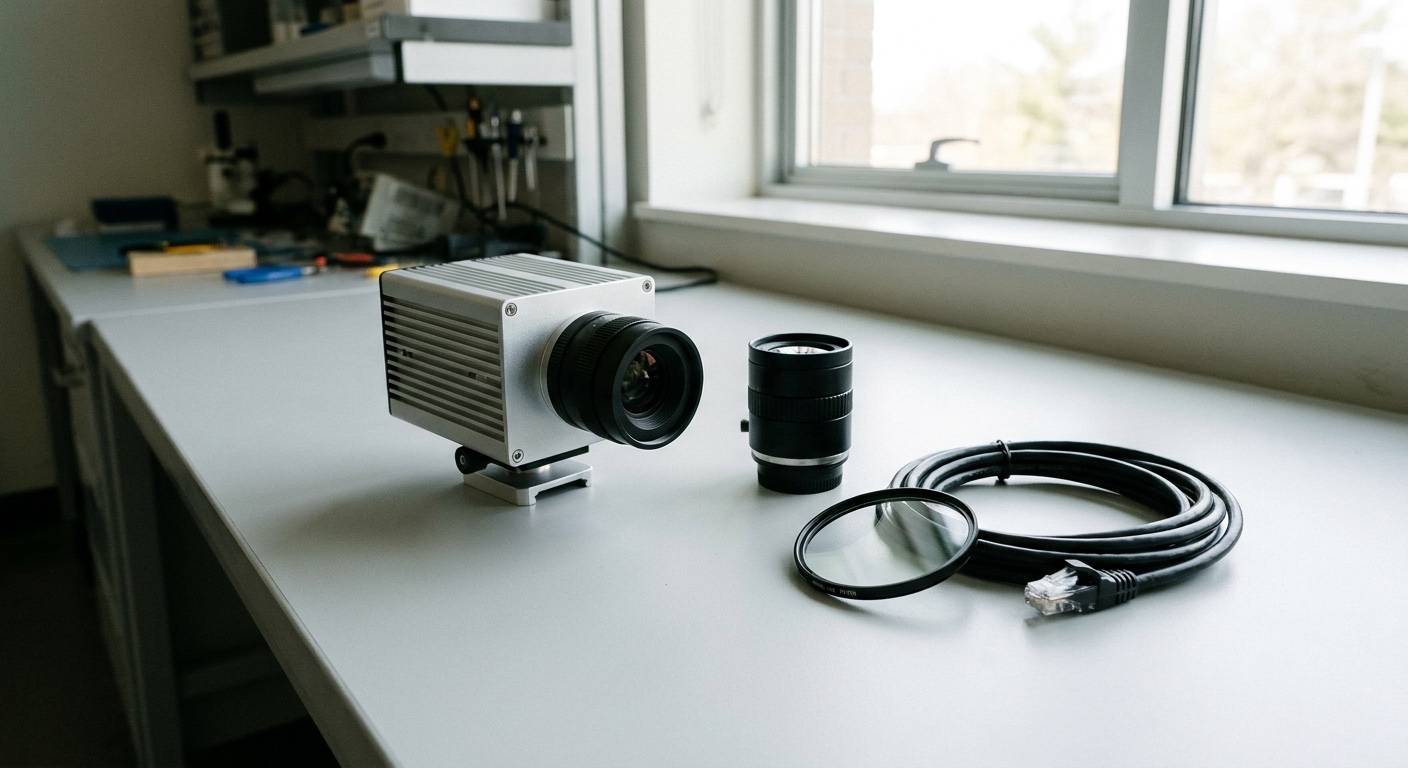
- An indium gallium arsenide photodiode array bonded to a silicon readout chip, responding from about 900 to 1,700 nm. The InGaAs sets the long-wave limit; the indium phosphide substrate it grows on sets the short-wave edge. Most industrial and scientific SWIR cameras use it.
- Visible-extended InGaAs
- Thin or remove the indium phosphide and the same sensor picks up visible light too, from about 400 nm (450 to 500 nm in some designs) out to 1,700 nm. One camera then covers both.
- Copper-bonded InGaAs
- Sony's SenSWIR sensors join the InGaAs layer to the silicon readout with copper-to-copper connections instead of indium bumps. That allows 5 µm pixels and a response from about 400 to 1,700 nm, and several camera makers build these sensors into their own cameras.
- Extended InGaAs and MCT
- More indium in the alloy moves the cutoff out to roughly 2.2 to 2.5 µm; vendor figures run from 1.8 to 2.6 µm. Dark current rises and the sensor needs more cooling than standard InGaAs. Mercury cadmium telluride covers the same range and usually needs deeper cooling still.
- Quantum dot
- A film of lead sulfide nanocrystals coated straight onto a silicon readout chip, with the size of the dots setting the cutoff wavelength. The sensor is made in one piece on the silicon, with no pixel-by-pixel bonding step.
- Germanium on silicon
- Germanium photodiodes bonded to a silicon readout detect light out to about 1,600 nm, and silicon foundries can make them, which is the cost case for them. Avalanche arrays of this kind have been shown working at 1,550 nm.
Area-scan, line-scan, cooled and OEM
SWIR cameras differ in how they build an image, how hard they cool the sensor and how they are packaged. Which one fits depends mostly on whether the product is moving and how much light you can put on it.
Area-scan SWIR cameras
A two-dimensional sensor grabs the whole frame in one exposure, the same way a standard machine vision camera does. This is the type used for part and package checks, wafers and solar cells, surveillance, laser work and lab imaging.
- Common InGaAs formats are 320 x 256, 640 x 512 and 1280 x 1024 pixels.
- Many cameras run faster when you read out only part of the sensor.
- Sold as compact machine vision cameras, sealed outdoor housings and benchtop scientific cameras.
Line-scan SWIR cameras
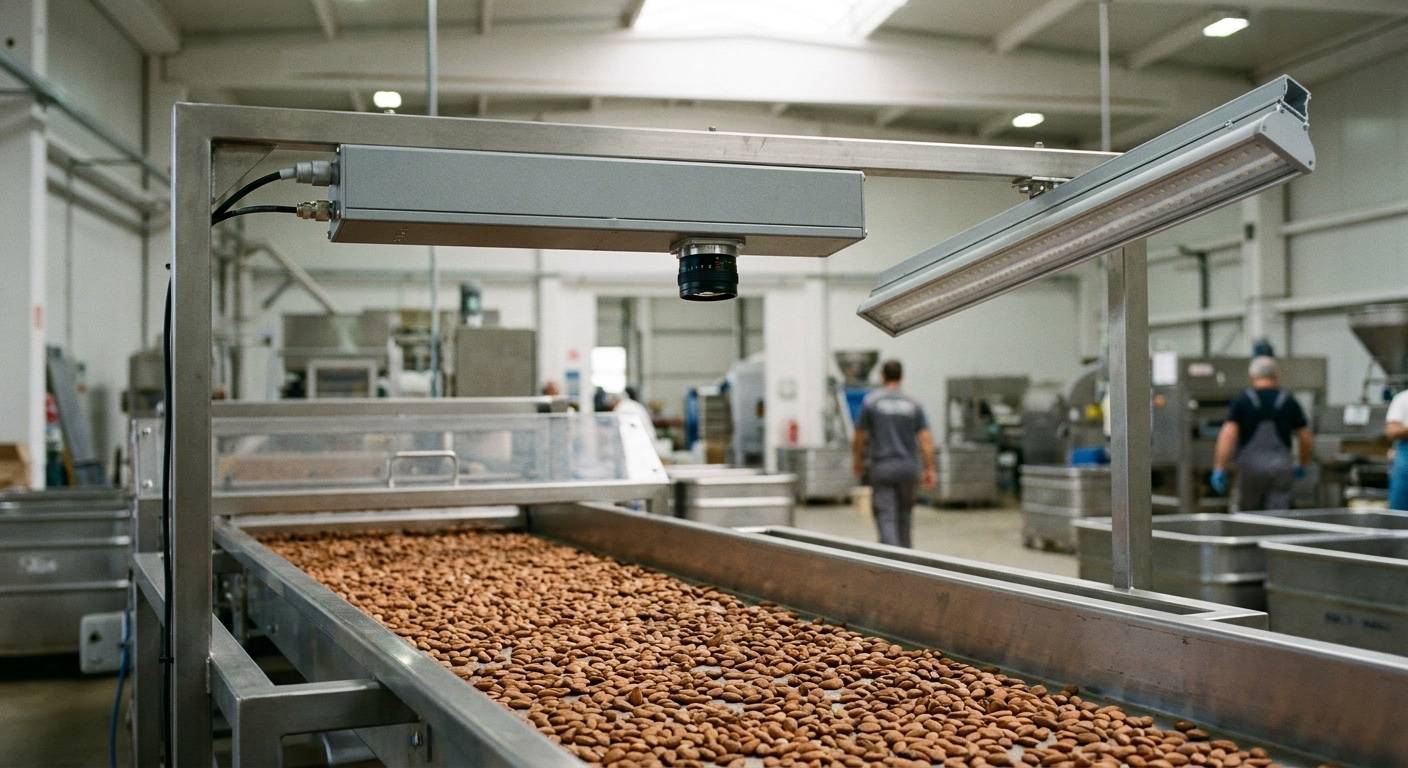
One row of InGaAs pixels, or a few rows, builds the picture a line at a time as the product moves underneath. Line-scan cameras suit continuous webs, wide belts and the product stream inside sorting machines.
- The image has no fixed length. Resolution across the belt comes from the pixels in the row.
- Set the line rate to the belt speed, and add an encoder if the speed varies.
- It needs a bright, even line of SWIR light across the full width.
Cooling and packaging
- Uncooled or temperature-stabilized
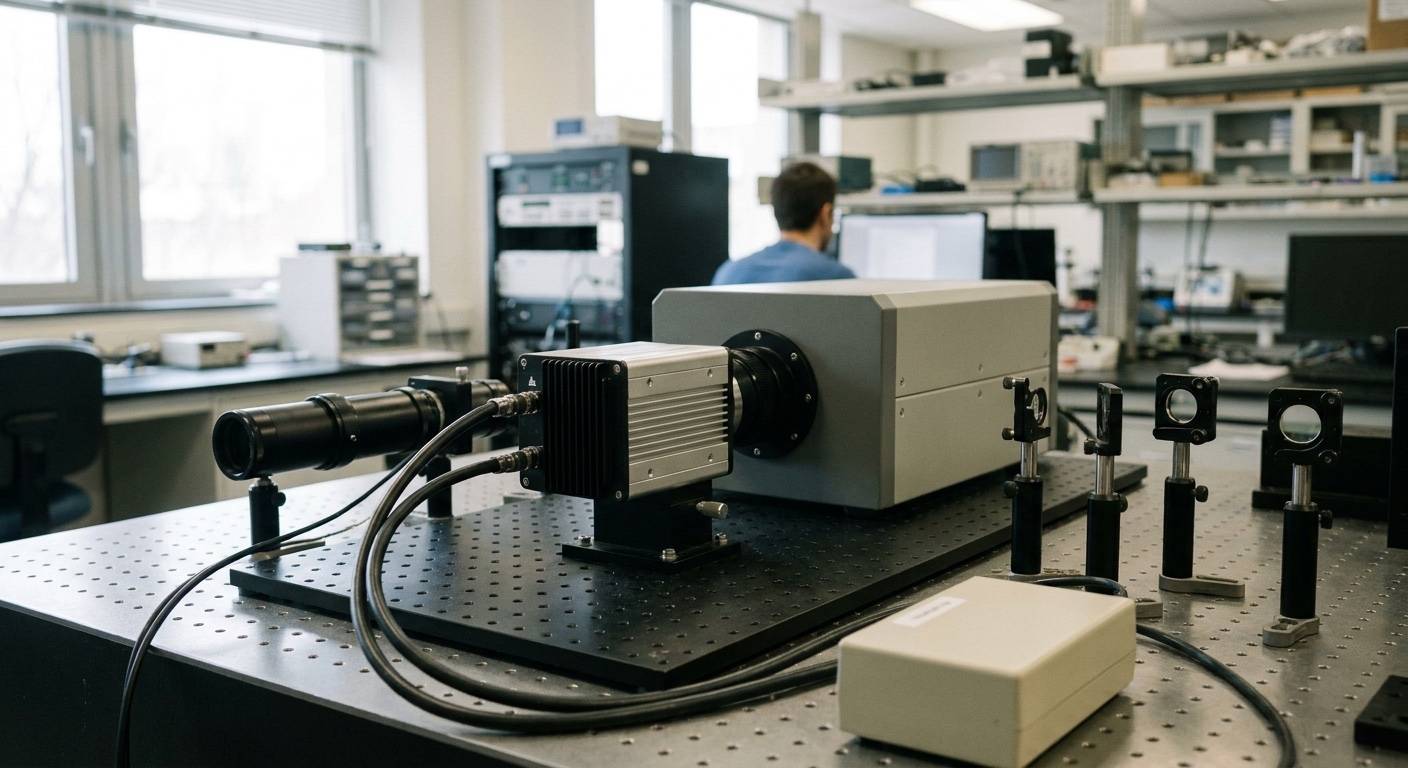
- No active cooling, or a thermoelectric element that only holds the sensor at a steady temperature. They are small, draw little power and suit bright scenes with short exposures. At short exposures, recent uncooled sensors have tested close to cooled ones.
- TEC-cooled
- A thermoelectric (Peltier) cooler holds the sensor below ambient. InGaAs dark current roughly doubles for every 9 °C or so, so cooling pays off most on long exposures and in low light.
- Deep-cooled scientific
- Heavier cooling for long exposures in spectroscopy and NIR-II fluorescence imaging. These cameras give up speed to get the noise down.
- OEM camera cores
- Board-level modules without a full housing, for builders who put SWIR imaging into gimbals, handheld devices, sorting machines and instruments. They usually come with a development kit and documented interfaces.
Where SWIR cameras earn their keep
Any job where water, silicon, plastics, haze or an infrared laser defeats a visible camera is worth a SWIR test, on a production line or a lab bench.
- Food and nut sorting
- Finding foreign material and moisture differences in nuts, grain and produce at full line speed, often inside optical sorting machines.
- Moisture and fill-level checks
- Grading water content in materials and food, and reading liquid levels through opaque containers.
- Plastics recycling
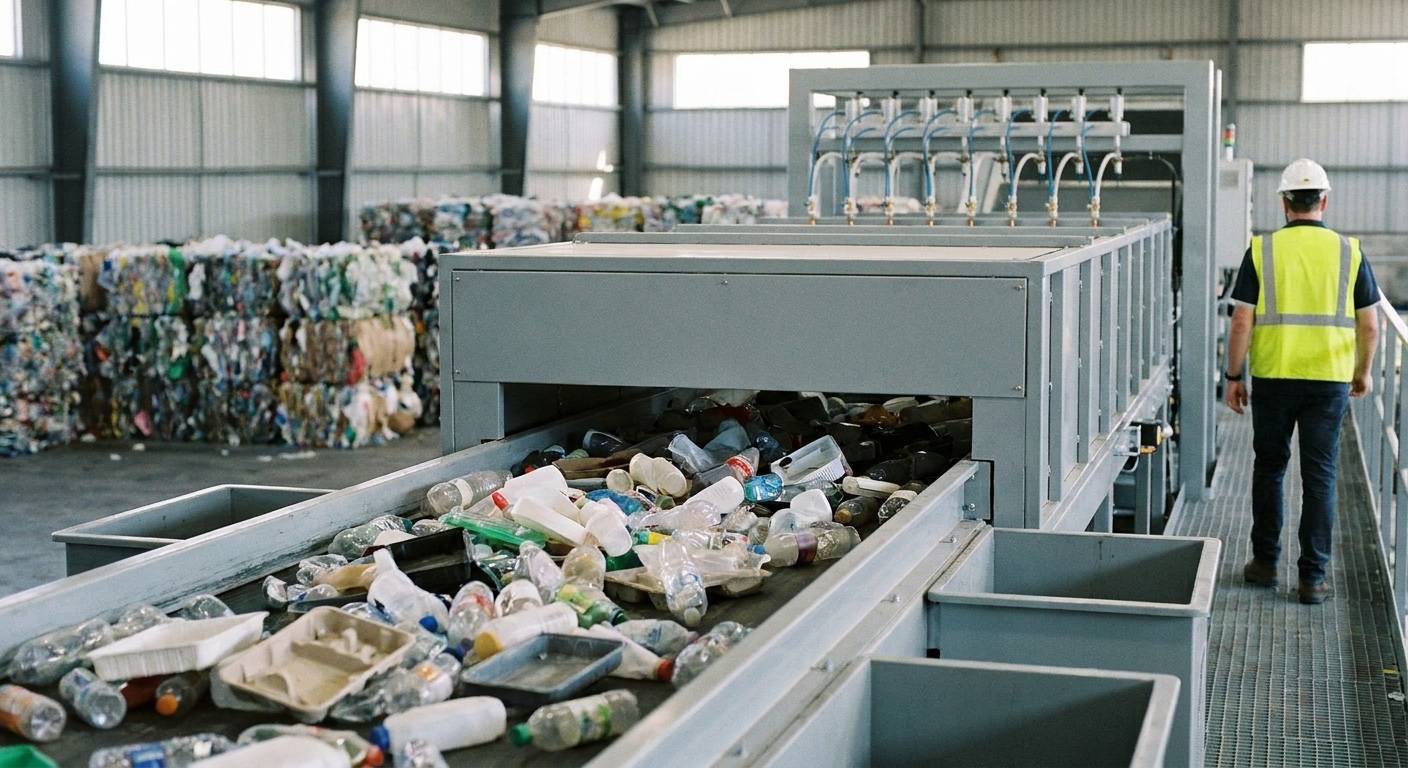
- Telling polymers apart by their SWIR absorption so air jets can split mixed waste on the belt. Black plastics colored with carbon black remain a known gap.
- Semiconductor and solar
- Looking through silicon for cracks and voids in wafers and ingots, and imaging the electroluminescence and photoluminescence of solar cells to find cracks and dead areas.
- Hot glass and metal
- Imaging molten glass, hot glass containers and hot metal, which give off their own SWIR light. Vendors put the practical lower limit at roughly 100 to 150 °C.
- Surveillance and long range
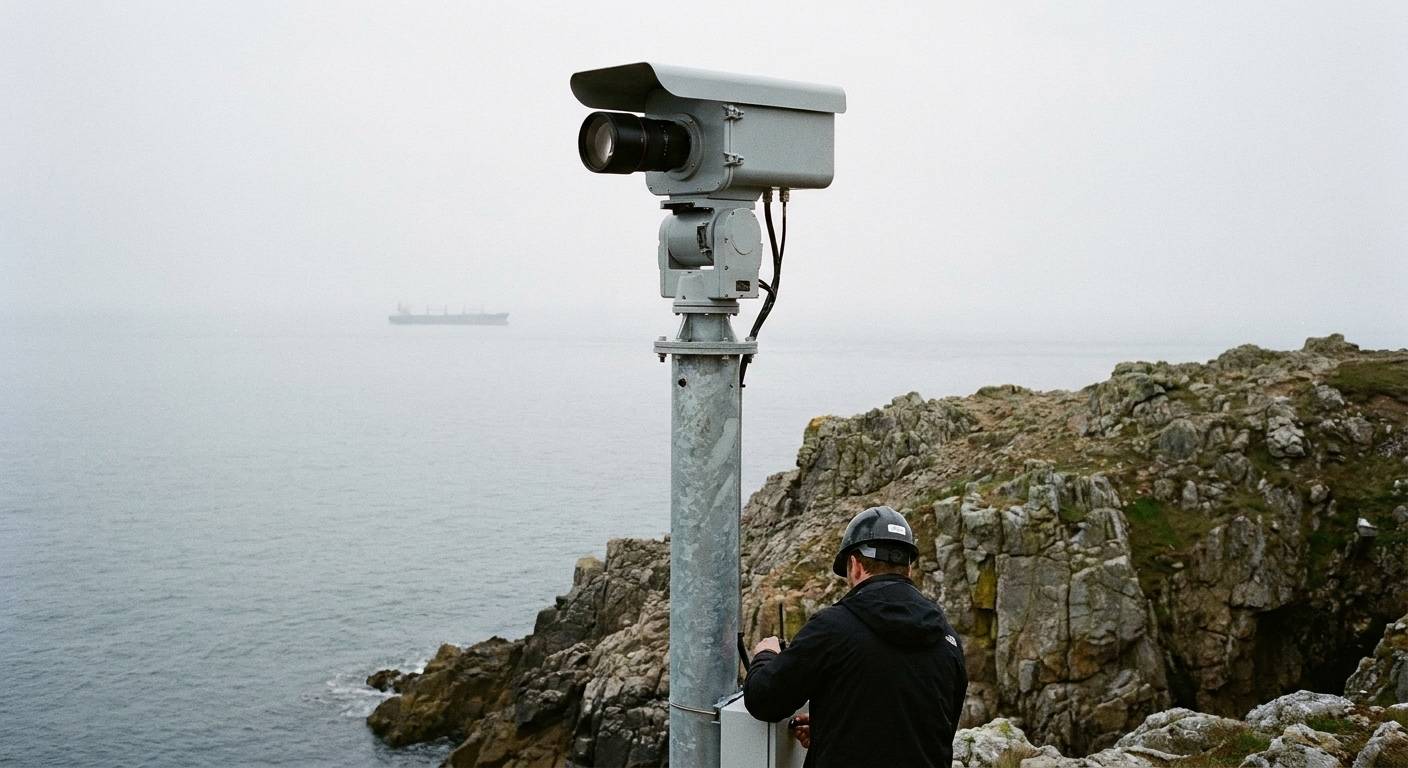
- Seeing farther through haze, working behind windows and spotting laser points on coastal, border and perimeter cameras, often next to visible and thermal sensors.
- Laser work
- Imaging and aligning 1,064 nm and 1,550 nm beams, where a silicon camera is weak or blind.
- Spectroscopy and hyperspectral
- SWIR hyperspectral cameras use the same kind of InGaAs line detector to measure what a material is made of, one line at a time as it passes.
- Life-science and NIR-II
- Fluorescence imaging in the second near-infrared window, about 1,000 to 1,700 nm, where tissue scatters less light than at visible wavelengths. Preclinical research groups use it.
What to settle before you ask for a quote
| Factor | What it decides |
|---|---|
| Wavelength range | Standard InGaAs covers about 900 to 1,700 nm. Go visible-extended if you also need visible detail, and extended SWIR only when the feature you need lies past 1,700 nm, because it brings more noise and more cooling. |
| Resolution and pixel size | Pixels across the field of view set the smallest defect you can resolve. Small pixels fit more resolution on a sensor and allow smaller lenses; big pixels gather more light each. |
| Frame or line rate | Match it to the line speed or the event you need to catch. |
| Dark current and noise | Dark current climbs with exposure time and temperature. Compare datasheet figures measured under the same conditions. |
| Cooling | Uncooled or stabilized for bright scenes and short exposures, TEC-cooled for longer exposures and steady measurements, deep-cooled for long scientific exposures. |
| Image correction | InGaAs pixels are bonded to the readout one by one, which leaves pixel-to-pixel differences that have to be corrected. Ask how the camera corrects them and what it does with defective pixels. |
| Interface | GigE Vision for long cables and multi-camera setups, USB3 Vision for a simple bench setup, CoaXPress or Camera Link for high data rates through a frame grabber. |
| Lens and lighting | Plan a SWIR-corrected lens and SWIR lighting along with the camera. A lens made only for visible light shifts focus in the SWIR and can make a good camera look poor. |
| Export controls | Depending on their specifications, some SWIR cameras and focal plane arrays are controlled under the US Export Administration Regulations. Ask the supplier for the classification of the exact model and leave time for any licence. |
Camera interfaces
Most SWIR cameras on these links support GenICam, the common programming interface, so their settings behave the same way in standard machine vision software.
- GigE Vision
- Standard Ethernet cable, long runs and simple multi-camera networks.
- USB3 Vision
- A direct link to a PC over a short cable. Handy on a lab bench or for a prototype.
- CoaXPress
- High data rates over coaxial cable into a frame grabber, for fast line-scan and high-resolution cameras.
- Camera Link
- An older frame-grabber interface still found on many line-scan and scientific cameras.
Setting up a SWIR system, step by step
Choose the camera, lens, filter and light together. A lens designed only for visible light focuses SWIR light in a different place, and lighting built for visible cameras is a poor match.
- 1Put real samples under SWIR light first, ideally with the supplier, and confirm the contrast you need actually shows up.
- 2Pick the band. If the contrast sits in a narrow band, such as water near 1,450 nm, plan a bandpass filter or LEDs at that wavelength.
- 3Choose the sensor format from the field of view and the smallest feature you have to see.
- 4Choose a SWIR-corrected lens that suits the sensor size, the pixel size and the working distance.
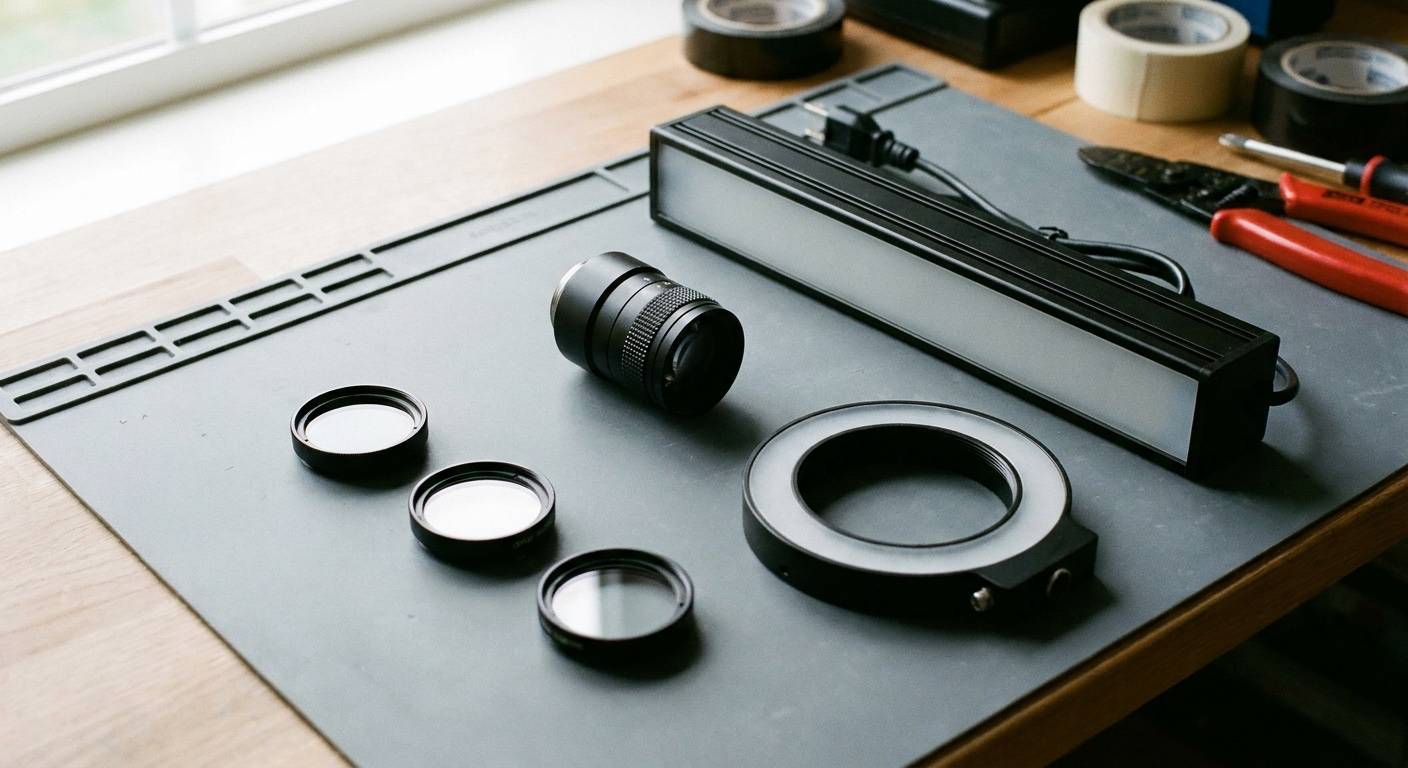
- 5Plan the lighting: halogen for broad SWIR coverage, or SWIR LEDs at set wavelengths (about 1,050, 1,200, 1,300, 1,450 and 1,550 nm are common), with diffusers or line lights to suit the layout.
- 6Load the camera's correction data, then prove the setup on known good and bad samples before it goes live.
Keeping image quality steady
- Run the camera at a steady temperature, or use correction data matched to temperature. InGaAs dark current climbs with heat.
- Let lamps and cameras warm up before you take reference images.
- Check the rated wavelength range of every lens, filter and window in the light path.
- Watch for stray light from windows and lamps. Daylight carries plenty of SWIR.
- Recheck flat-field and defective-pixel correction after you change exposure, gain or cooling.
- Keep lenses and protective windows clean on the line. Dust and residue scatter SWIR light too.
Eye safety: SWIR lamps and lasers are invisible, so there is no glare to warn you. Above about 1,400 nm the retina is not the main hazard, because the cornea absorbs the light first. That is not a hard cutoff, and a powerful source can still injure the eye or skin. Follow the laser and lamp safety rules for your source.
Information only. This page is general and educational. It is not engineering, optical, laser safety or export compliance advice, and it does not replace the manufacturer's datasheets and instructions, the standards and regulations that apply to you, or a qualified professional. Check everything before you rely on it. Read the full disclaimer.
SWIR camera questions
What is a SWIR camera?
A camera that images short-wave infrared light, the band just past what silicon image sensors can detect. Most use an indium gallium arsenide (InGaAs) sensor. The picture is made from reflected light, so it looks like a black and white photograph, but water, silicon and many plastics look quite different from how they appear to the eye.
What wavelength range does SWIR cover?
Sources define it differently. For a standard InGaAs camera it is about 900 to 1,700 nm. Extended SWIR cameras reach about 2.2 to 2.5 µm, and visible-extended InGaAs sensors start down at about 400 nm, so one camera covers visible and SWIR light.
How is a SWIR camera different from a thermal camera?
A thermal camera works in the long-wave infrared, about 8 to 14 µm, and sees the heat objects give off. It works in total darkness and shows temperature. A SWIR camera sees reflected light, so it needs a source such as the sun, night sky glow, halogen lamps or SWIR LEDs, and it shows surface detail and material differences rather than temperature. SWIR light also passes through ordinary glass, which blocks long-wave thermal imaging.
Why can't a normal camera see SWIR light?
Ordinary CMOS and CCD sensors are made of silicon. Light past about 1,100 nm does not carry enough energy to free an electron in silicon, so it goes through the sensor without being detected. SWIR cameras use materials that do absorb at those wavelengths, most often InGaAs, or newer options such as quantum dot films and germanium on silicon.
Why does water look dark in a SWIR image?
Water absorbs strongly near 1,450 nm. Anything that holds water, such as a wet patch, damp grain or the liquid in a bottle, soaks up more light there and looks darker. A second strong band near 1,940 nm lies beyond a standard InGaAs camera; you need an extended SWIR sensor to use it.
What can a SWIR camera see through?
It depends on the material and its thickness. Silicon and ordinary glass pass SWIR light, and in many conditions haze and light smoke scatter it less than visible light. That allows inspection inside silicon wafers and clearer long-range views on a hazy day. It does not see through metal, walls, thick fog or dense smoke. Always test on the real material.
Do SWIR cameras need special lenses?
Usually. A lens designed for visible light focuses SWIR light at a different point, so the image can come out soft. SWIR-corrected lenses use low-dispersion glass and coatings made for the band. Match the lens to the sensor size and pixel size; C-mount is a common fit.
What lighting works with SWIR cameras?
Light that contains SWIR. Sunlight and halogen lamps both do. SWIR LEDs are made at set wavelengths, commonly about 1,050, 1,200, 1,300, 1,450 and 1,550 nm, for when you need a particular material contrast. White LEDs built for visible machine vision are a poor match.
Does a SWIR camera need cooling?
It depends on the exposure time and the noise you can accept. InGaAs dark current roughly doubles for every 9 °C or so, so long exposures in spectroscopy or NIR-II imaging usually call for thermoelectric or deeper cooling. On a bright line with short exposures, an uncooled or temperature-stabilized camera often does the job. Extended SWIR sensors need more cooling than standard InGaAs.
What is extended SWIR?
Cameras that respond past the roughly 1,700 nm limit of standard InGaAs, out to about 2.2 to 2.5 µm. They use InGaAs with more indium in it, or mercury cadmium telluride. The extra range reaches absorption bands that standard InGaAs misses, such as the water band near 1,940 nm, at the cost of higher dark current and more cooling.
Are SWIR cameras subject to export controls?
Some are. Depending on their specifications, certain SWIR cameras and focal plane arrays are controlled under the US Export Administration Regulations, and others are not. Ask the supplier for the export classification of the exact model, and allow time for a licence if it will cross a border.
What should I send to get a quote?
The application, the material or scene you need to see, the wavelength range, the resolution, the frame or line rate, whether it is an area-scan or line-scan job, the interface your system uses, the quantity and your timeline. Sample images, the working distance and the field of view help too. With that, a supplier can suggest a camera, lens and lighting and come back with a quote.
Get a SWIR camera quote
One camera for a lab bench or a set for a production line: tell us the application, the wavelength range, the resolution and how many you need, and you will get a quote back.
- Area-scan and line-scan SWIR cameras
- Uncooled, TEC-cooled and deep-cooled models
- OEM camera cores, SWIR lenses and lighting